


FAA finds no fuel system fault in Air India Dreamliner crash probe
US aviation regulator rules out mechanical failure in June 12 Air India 787 crash that killed 260 people, as probe continues into cause of fuel cutoff
 "plane crash")
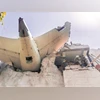
US FAA rules out fuel system failure in Air India Boeing crash (Photo: PTI)
Listen to This Article
The head of the United States Federal Aviation Administration (FAA) has said there is no conclusive evidence that a mechanical fault in the fuel control system caused last month’s fatal crash of an Air India Boeing 787 Dreamliner. The June 12 crash, which took place shortly after take-off from Ahmedabad, killed 260 people and is being described as the deadliest aviation disaster in Air India’s recent history.
According to a Reuters report, FAA Administrator Bryan Bedford told reporters at an aviation event in Wisconsin on Thursday that investigators had found no signs of malfunction in the fuel control unit or any indication of unintentional manipulation of the aircraft’s fuel switches.
“We feel very comfortable that this isn’t an issue with inadvertent manipulation of fuel control,” Bedford said, adding that mechanical failure had largely been ruled out.
Air India Flight 171 crashed minutes after take-off
The accident involved Air India Flight 171, which was en route to London Gatwick with 242 people on board. The plane crashed into a medical college in Ahmedabad’s Meghani Nagar area just minutes after take-off, killing 241 passengers and crew, as well as 19 people on the ground.
The sole survivor was 28-year-old Vishwash Kumar Ramesh, a British national of Indian origin, who escaped through a damaged emergency exit from seat 11A.
Also Read

 "plane crash, air india crash, Ahmedabad plane crash")
 "air india plane")
 "Air India Express")
 "air india plane crash")
Fuel switches cut off supply, say preliminary findings
India’s Aircraft Accident Investigation Bureau (AAIB), which is leading the probe with support from the US National Transportation Safety Board (NTSB), found that both fuel control switches—key components that regulate engine fuel flow—moved to the ‘cutoff’ position seconds after take-off, abruptly cutting off fuel to the engines.
Although the switches were moved back to the ‘run’ position within 10 seconds, the engines did not regain thrust in time.
Cockpit recordings inconclusive on switch movement
Cockpit voice recordings revealed one pilot asking the other about the fuel switch movement during the critical moment, with the other pilot denying activation. Investigators have so far been unable to determine whether the remarks were made by First Officer Clive Kunder or Captain Sumeet Sabharwal.
While no conclusions have been drawn, the AAIB is examining whether the switch movement was the result of human error, miscommunication, or a systems-related anomaly.
DGCA orders urgent Boeing switch inspections
In response to the crash, India’s Directorate General of Civil Aviation (DGCA) on July 14 issued an order for immediate inspections of the locking mechanisms on fuel control switches in Boeing 787 and 737 aircraft operated by Indian carriers. The deadline for compliance was set at July 21.
Air India has since confirmed completion of the inspections across its widebody and narrowbody fleet, reporting no anomalies. Boeing and the FAA have also said the current systems, including the locking mechanisms, are secure and do not warrant design changes based on available evidence.
More From This Section
 "Dark clouds, clouds, Black Clouds, monsoon")
 "Telangana CM Revanth Reddy")
 "Siddaramaiah, Karnataka CM")
 "King Charles, PM Modi")
 "Parliament, New Parliament")
Topics : Air India ahmedabad plane crash US FAA Aviation Federal Aviation Administration DGCA AAIB BS Web Reports
Don't miss the most important news and views of the day. Get them on our Telegram channel
First Published: Jul 25 2025 | 9:44 AM IST