
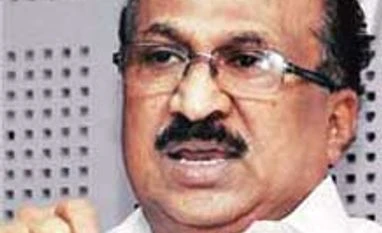
 "Centre will bear the subsidy but for two years and up to Rs 32 a kg: K V Thomas")


The government's decision to abolish the levy sugar mechanism would impose extra burden on the Centre to subsidise state governments. Food Minister K V Thomas told reporters that the Centre would pay the difference between the market price at which states bought sugar from the millers and at which they sold through ration shops. The difference will be paid up to the market price of Rs 32 a kg, and this subsidy burden has been capped for two years. The major reform measure would not jack up retail prices, he said. Edited excerpts:
On sale of sugar through ration shops:
On capping subsidy:
The subsidy of Rs 5,300 crore has been capped for two years, till September 2014, as the Centre will bear it only up to Rs 32 a kg, which is the market price, at which states will buy the sweetener from the millers.
On excise duty and import, export tariff:
The CCEA (Cabinet Committee on Economic Affairs) did not take any decision on increasing excise duty on sugar or reviewing the import or export tariff to offset enhanced subsidy.
On other areas of decontrolling sugar - dismantling cane area reservation and distance criteria for sugar mills:
The issues fall within the domain of the state governments. The other reforms on bagasse and jute bags will be decided by the respective nodal ministries, petroleum and textiles.
On sugar prices:
Decontrolling sugar will not jack up the retail prices as India's annual sugar consumption is around 22 million tonnes, while production in 2012-13 is expected to be around 24 million tonnes. Of the 22 million tonnes of sugar consumed in India, bulk consumers such as soft-drink makers and others account for 14 million tonnes, while 60 million tonnes are consumed by the retail buyers.
On sale of sugar through ration shops:
States will purchase sugar from the open market through a transparent bidding process. Thereafter, they will sell it at the subsidised rate of Rs 13.50 a kg. The difference between the market price of sugar and the subsidised sale price will be compensated by the Centre. However, the compensation will be limited to Rs 18.50 per kg (Rs 32 - Rs 13.50), which is the market price. If states purchase sugar at a price more than Rs 32 per kg, they will have to bear the extra burden.
On the Centre's extra subsidy burden:
The Centre currently bears a subsidy of around Rs 2,600 crore per year on subsidised sale of sugar. It sells 1.6-2 million tonnes of sugar annually through ration shops. After the new mechanism is implemented, the Centre's subsidy burden will rise to around Rs 5,300 crore per year, an extra burden of around Rs 2,700 crore.
On the Centre's extra subsidy burden:
The Centre currently bears a subsidy of around Rs 2,600 crore per year on subsidised sale of sugar. It sells 1.6-2 million tonnes of sugar annually through ration shops. After the new mechanism is implemented, the Centre's subsidy burden will rise to around Rs 5,300 crore per year, an extra burden of around Rs 2,700 crore.
On capping subsidy:
The subsidy of Rs 5,300 crore has been capped for two years, till September 2014, as the Centre will bear it only up to Rs 32 a kg, which is the market price, at which states will buy the sweetener from the millers.
On excise duty and import, export tariff:
The CCEA (Cabinet Committee on Economic Affairs) did not take any decision on increasing excise duty on sugar or reviewing the import or export tariff to offset enhanced subsidy.
On other areas of decontrolling sugar - dismantling cane area reservation and distance criteria for sugar mills:
The issues fall within the domain of the state governments. The other reforms on bagasse and jute bags will be decided by the respective nodal ministries, petroleum and textiles.
On sugar prices:
Decontrolling sugar will not jack up the retail prices as India's annual sugar consumption is around 22 million tonnes, while production in 2012-13 is expected to be around 24 million tonnes. Of the 22 million tonnes of sugar consumed in India, bulk consumers such as soft-drink makers and others account for 14 million tonnes, while 60 million tonnes are consumed by the retail buyers.
You’ve reached your limit of {{free_limit}} free articles this month.
Subscribe now for unlimited access.
Already subscribed? Log in
Subscribe to read the full story →*Subscribe to Business Standard digital and get complimentary access to The New York Times

Smart Quarterly
₹900
3 Months
₹300/Month
SAVE 25%
Smart Essential
₹2,700
1 Year
₹225/Month
SAVE 46%
*Complimentary New York Times access for the 2nd year will be given after 12 months
Super Saver
₹3,900
2 Years
₹162/Month
Subscribe
Renews automatically, cancel anytime
Here’s what’s included in our digital subscription plans
Exclusive premium stories online

Over 30 premium stories daily, handpicked by our editors


Complimentary Access to The New York Times
News, Games, Cooking, Audio, Wirecutter & The Athletic
Business Standard Epaper
Digital replica of our daily newspaper — with options to read, save, and share
Curated Newsletters
Insights on markets, finance, politics, tech, and more delivered to your inbox
Market Analysis & Investment Insights
In-depth market analysis & insights with access to The Smart Investor


Archives
Repository of articles and publications dating back to 1997
Ad-free Reading
Uninterrupted reading experience with no advertisements

Seamless Access Across All Devices
Access Business Standard across devices — mobile, tablet, or PC, via web or app
SAVE 25%