
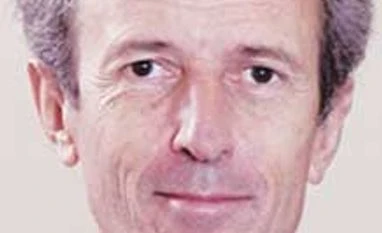
 "Opportunities likely to increase in India despite higher inequalities: Martin Rama")


Public discourse on inequality in India is dominated by the view that in the post-liberalisation era there has been a growing concentration of wealth in the hands of a few. But a new report by the World Bank points out that opportunities for economic advancement, especially for the poor, have actually increased. Martin Rama, chief economist, South Asia, at the World Bank, and the main author of the report, spoke to Ishan Bakshi on the key issues of the debate on inequality in India. Edited excerpts:
There is a view that greater inequalities in income and wealth lead to less opportunities for economic advancement. Then why is it that opportunities, especially for the poor, have increased in India, even while inequality has risen?
My sense is that a country in the middle of a demographic and urbanisation transition as dramatic as India is going through will provide avenues for people to offset the disadvantages. When we compare with other countries in East and South Asia, probably for some time, inequality is likely to increase, while opportunities also improve.
A focus on either reducing inequality or expanding opportunity will require different kinds of government intervention. Should the focus be on expanding opportunity or on redistributionist policies to reduce inequality?
For a lot of people, you can't go back in time, you can't give them the health they didn't have when they were kids; they will not go back to school. So, I will not underestimate the potential you have through urbanisation and policies that promote job creation to redress those inequalities for a lot of people for whom you can't do much.
I think that tax and redistribution is probably not the way to go. In many industrialised countries, the debate on inequality is framed that way. Tax the one per cent. But, given the weaknesses of the tax system, going that way could probably create more problems than it solves. The report points out the areas the policy should focus on in relation to opportunity - education, health, sanitation, and in relation to mobility urbanisation and jobs. In relation to social protection, how you design your social protection to minimise leakage and reach the right population.
What sort of policy interventions are you looking at to promote opportunity in India?
There has been amazing progress in primary education. But the challenge now is quality. Children from richer families are getting better quality of education. Secondary education is not universal yet, especially for girls. Taking girls through secondary education is a priority. On health, it's tricky because it is expensive; the rich can afford and it can be very burdensome. To get into universal forms of health insurance, which can be publicly provided or privately provided, is a priority. And then, you have sanitation and basic hygiene.
Given the debate in India over subsidies and issues of targeting, do you think it's possible to have the kind of regime that exists in the West?
It's possible to have universal forms of social protection. On the other hand, I don't think that India, where informality is so prevalent, can have the same kind of social protection instruments. The European model is built around wage employment, where employers and employees contribute in different ways. But wage employment is not the dominant form of work in South Asia and you also have a lot of people out of the labour force in different ways. So clearly, it has to be in different forms, but one can still envision universal health insurance with different mechanisms.
There is a view that greater inequalities in income and wealth lead to less opportunities for economic advancement. Then why is it that opportunities, especially for the poor, have increased in India, even while inequality has risen?
My sense is that a country in the middle of a demographic and urbanisation transition as dramatic as India is going through will provide avenues for people to offset the disadvantages. When we compare with other countries in East and South Asia, probably for some time, inequality is likely to increase, while opportunities also improve.
A focus on either reducing inequality or expanding opportunity will require different kinds of government intervention. Should the focus be on expanding opportunity or on redistributionist policies to reduce inequality?
For a lot of people, you can't go back in time, you can't give them the health they didn't have when they were kids; they will not go back to school. So, I will not underestimate the potential you have through urbanisation and policies that promote job creation to redress those inequalities for a lot of people for whom you can't do much.
I think that tax and redistribution is probably not the way to go. In many industrialised countries, the debate on inequality is framed that way. Tax the one per cent. But, given the weaknesses of the tax system, going that way could probably create more problems than it solves. The report points out the areas the policy should focus on in relation to opportunity - education, health, sanitation, and in relation to mobility urbanisation and jobs. In relation to social protection, how you design your social protection to minimise leakage and reach the right population.
What sort of policy interventions are you looking at to promote opportunity in India?
There has been amazing progress in primary education. But the challenge now is quality. Children from richer families are getting better quality of education. Secondary education is not universal yet, especially for girls. Taking girls through secondary education is a priority. On health, it's tricky because it is expensive; the rich can afford and it can be very burdensome. To get into universal forms of health insurance, which can be publicly provided or privately provided, is a priority. And then, you have sanitation and basic hygiene.
Given the debate in India over subsidies and issues of targeting, do you think it's possible to have the kind of regime that exists in the West?
It's possible to have universal forms of social protection. On the other hand, I don't think that India, where informality is so prevalent, can have the same kind of social protection instruments. The European model is built around wage employment, where employers and employees contribute in different ways. But wage employment is not the dominant form of work in South Asia and you also have a lot of people out of the labour force in different ways. So clearly, it has to be in different forms, but one can still envision universal health insurance with different mechanisms.
You’ve reached your limit of {{free_limit}} free articles this month.
Subscribe now for unlimited access.
Already subscribed? Log in
Subscribe to read the full story →*Subscribe to Business Standard digital and get complimentary access to The New York Times

Smart Quarterly
₹900
3 Months
₹300/Month
SAVE 25%
Smart Essential
₹2,700
1 Year
₹225/Month
SAVE 46%
*Complimentary New York Times access for the 2nd year will be given after 12 months
Super Saver
₹3,900
2 Years
₹162/Month
Subscribe
Renews automatically, cancel anytime
Here’s what’s included in our digital subscription plans
Exclusive premium stories online

Over 30 premium stories daily, handpicked by our editors


Complimentary Access to The New York Times
News, Games, Cooking, Audio, Wirecutter & The Athletic
Business Standard Epaper
Digital replica of our daily newspaper — with options to read, save, and share

Curated Newsletters
Insights on markets, finance, politics, tech, and more delivered to your inbox
Market Analysis & Investment Insights
In-depth market analysis & insights with access to The Smart Investor


Archives
Repository of articles and publications dating back to 1997
Ad-free Reading
Uninterrupted reading experience with no advertisements


Seamless Access Across All Devices
Access Business Standard across devices — mobile, tablet, or PC, via web or app
SAVE 25%