
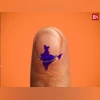
 "LS elections: Under-representation issue spotlit as only 9.6% women in fray")


As India eagerly awaits the results of the 2024 Lok Sabha elections on Tuesday, a significant spotlight has been cast on the under-representation of women among the candidates.
According to official data, a mere 9.6 per cent of the 8,337 candidates are women.
This year marks the first general election since the passage of the women's reservation bill, which aims to reserve one-third of seats in the Lok Sabha and state assemblies for women a bill which, despite being passed, is yet to be implemented.
Despite the landmark legislation, the representation of women in this year's election has seen only a marginal increase.
Out of the 8,337 candidates, only 797 are women, according to poll rights body Association of Democratic Reforms.
The seven phases of the elections consistently reflected this gender disparity. In the first phase, only 135 out of 1,618 candidates were women.
Similar trends followed in subsequent phases, with women candidates making up a small fraction.
In phase 2, there were 100 women out of 1,192 candidates, while phase 3 had 123 women out of 1,352 Lok Sabha nominees.
In the fourth phase, there were 170 women out of 1,710 candidates.
Phase 5 saw 82 women out of 695 contestants, phase 6 had 92 out of 866 and the final phase, phase 7, had 95 women out of 904 candidates.
The number of women contesting general elections has increased from 3 per cent in 1957 to nearly 10 per cent in 2024.
The trend shows a slight upward trajectory over the past 15 years. In 2009, women constituted 7 per cent of the total candidates, which rose to 9.6 per cent in 2024, according to an analysis by think tank PRS.
With 797 women contesting in Lok Sabha polls 2024, a steady increase is noted from previous elections: 7 per cent in 2009, 8 per cent in 2014, and 9 per cent in 2019.
Among the major parties, the Bharatiya Janata Party (BJP) leads with 69 women out of 440 Lok Sabha nominees, constituting 16 per cent. The Congress has 41 women out of 327 candidates, making up 13 per cent.
Smaller parties and regional players have fielded a higher proportion of female candidates.
Notably, the Naam Tamilar Katchi has achieved equal gender representation with 50 per cent women candidates. Other parties with significant female representation include Lok Janshakti Party (Ram Vilas) and Nationalist Congress Party, each with 40 per cent women candidates.
The Jharkhand Mukti Morcha (JMM) and Biju Janata Dal (BJD) both have 33 per cent female representation, while the Rashtriya Janata Dal (RJD) has 29 per cent. The Samajwadi Party (SP) has 20 per cent, and the All India Trinamool Congress (AITC) has 25 per cent.
(Only the headline and picture of this report may have been reworked by the Business Standard staff; the rest of the content is auto-generated from a syndicated feed.)
You’ve reached your limit of {{free_limit}} free articles this month.
Subscribe now for unlimited access.
Already subscribed? Log in
Subscribe to read the full story →

Smart Quarterly
₹900
3 Months
₹300/Month
Smart Essential
₹2,700
1 Year
₹225/Month
Super Saver
₹3,900
2 Years
₹162/Month
Renews automatically, cancel anytime
Here’s what’s included in our digital subscription plans
Exclusive premium stories online

Over 30 premium stories daily, handpicked by our editors


Complimentary Access to The New York Times
News, Games, Cooking, Audio, Wirecutter & The Athletic
Business Standard Epaper
Digital replica of our daily newspaper — with options to read, save, and share

Curated Newsletters
Insights on markets, finance, politics, tech, and more delivered to your inbox
Market Analysis & Investment Insights
In-depth market analysis & insights with access to The Smart Investor


Archives
Repository of articles and publications dating back to 1997
Ad-free Reading
Uninterrupted reading experience with no advertisements


Seamless Access Across All Devices
Access Business Standard across devices — mobile, tablet, or PC, via web or app