


 "The Indus rebus: Why the ancient script remains an unsolved puzzle")


For all the progress humanity has made in deciphering its past, some ancient scripts remain stubbornly unreadable: The glyphs of the Olmec and Zapotec Mesoamerican civilisations, the cryptic Proto-Elamite of early Iran, and the curlicued Rongorongo of Easter Island. Each of these represents an unsolved mystery, a locked door without a key.
But if you’re gunning for intellectual glory — and a $1 million payday from the Tamil Nadu government, as announced by Chief Minister M K Stalin last month -— then the most formidable challenge of all beckons: Deciphering the script of the Indus Valley Civilisation, which thrived some 4,000 years ago.
Linguists, archaeologists, and codebreakers have all tried to crack the Indus script. Theories have mushroomed: Some link it to early Brahmi, the script that gave rise to South Asia’s many written languages, some insist it belongs to the Dravidian family, others claim it’s Indo-Aryan, or even Sumerian. There are sceptics who argue these symbols don’t represent a spoken language at all, but religious or political iconography. Yet, despite all the research and speculation, the script remains unreadable. Partly because of the scarcity of material — only about 4,000 examples of Indus script have been found, almost all on small objects such as seals, pottery, and tablets.
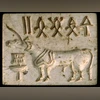
Then there’s the brevity: The average inscription contains just five characters and the largest comprising only 14. Unlike the Rosetta Stone or Mesopotamian cuneiform tablets, there are no lengthy texts — nothing hinting at a grammar or syntax. Consider the civilisation’s iconic square seals, found primarily in Harappa, Mohenjo-daro, and Dholavira, as well as in distant lands of trading partners along the Persian Gulf and in Mesopotamia. Usually, a line of symbols runs along the top, beneath which sits a central animal motif — often a one-horned creature casually labelled a “unicorn” — alongside an unidentified object. What does it all mean? A merchant’s signature? A clan emblem? A “Made in Harappa” stamp?
In the 1970s, civil servant Iravatham Mahadevan used early computers at the Tata Institute of Fundamental Research to compile a corpus of Indus script, establishing they were written right to left. Later, Asko Parpola published a photographic record of Harappan inscriptions. Advances in computational linguistics have since underscored structured patterns: Sign pairings, positional preferences, and systematic segmentation — strong evidence that Indus script follows linguistic rules.
Counting every character from Indus inscriptions, researchers estimate between 400 and 700 distinct signs. The variation comes down to interpretation, after all, your handwritten “a” may look nothing like mine, yet both are the same letter. The sheer number of signs suggests the script, if it was indeed writing, was logosyllabic, blending words and syllables. Indus script remains undeciphered because it probably lacks three crucial elements that have aided other breakthroughs. Egyptian hieroglyphs, for example, referenced rulers like Ptolemy and Cleopatra, providing a link to known records, but Indus script has no confirmed historical figures or place names. The Rosetta Stone helped unlock Egyptian by presenting the same text in multiple languages, yet no such bilingual inscription has surfaced for the Indus. And while hieroglyphs were tied to Coptic, a still-used language, and Maya glyphs survive through indigenous speech, the language behind Indus script remains unidentified.
The core principle guiding the ongoing research is that a writing system must be both structured enough to convey clear meaning and adaptable enough to express diverse ideas. In English, for instance, “the” can be followed by many words but never directly by verbs like “eat” or “sit”. Also, “t” pairs naturally with many letters but rarely with “b” or “c”, while “q” almost always has a “u” after it.
This balance between the rigidity of computer code and the randomness of DNA — or conditional entropy — indicates Indus inscriptions align with known writing systems. Statistical analyses reinforce this, revealing structured patterns in sign sequences — pairs, triplets, even quads. Yet some argue Indus people were illiterate, claiming the script was a mere symbol system. Their objections? Control datasets were artificial, non-linguistic systems can mimic similar entropy patterns, and the lack of long texts implies no true literacy.
While the linguistic roots of Indus script remain fiercely contested, deciphering this script will require future breakthroughs: Ancient DNA might reveal clues about the ancestry of Indus people and thus their Indus language, while new excavations could one day uncover a Rosetta stone for the script.
Until then, it is unlikely there will be claimants for the $1 million prize.
One subscription. Two world-class reads.
Already subscribed? Log in
Subscribe to read the full story →*Subscribe to Business Standard digital and get complimentary access to The New York Times

Smart Quarterly
₹900
3 Months
₹300/Month
SAVE 25%
Smart Essential
₹2,700
1 Year
₹225/Month
SAVE 46%
*Complimentary New York Times access for the 2nd year will be given after 12 months
Super Saver
₹3,900
2 Years
₹162/Month
Subscribe
Renews automatically, cancel anytime
Here’s what’s included in our digital subscription plans
Exclusive premium stories online

Over 30 premium stories daily, handpicked by our editors


Complimentary Access to The New York Times
News, Games, Cooking, Audio, Wirecutter & The Athletic
Business Standard Epaper
Digital replica of our daily newspaper — with options to read, save, and share

Curated Newsletters
Insights on markets, finance, politics, tech, and more delivered to your inbox
Market Analysis & Investment Insights
In-depth market analysis & insights with access to The Smart Investor


Archives
Repository of articles and publications dating back to 1997
Ad-free Reading
Uninterrupted reading experience with no advertisements


Seamless Access Across All Devices
Access Business Standard across devices — mobile, tablet, or PC, via web or app
SAVE 25%